Gear, Gear & more Gear
Who says a month-long hike, says gear. A lot of it. And it needs to be suited to cold, probably wet conditions too. Here’s an overview of the gear I’ll be taking along on my hike. I intend to review its different elements along the way to give you my feedback so stay tuned for that.
The Big Three
The big three cover the three heaviest items: your backpack, your sleep system (sleeping bag+pad), and your shelter. They are the biggest, heaviest and most expensive pieces of gear.
1 – Backpack
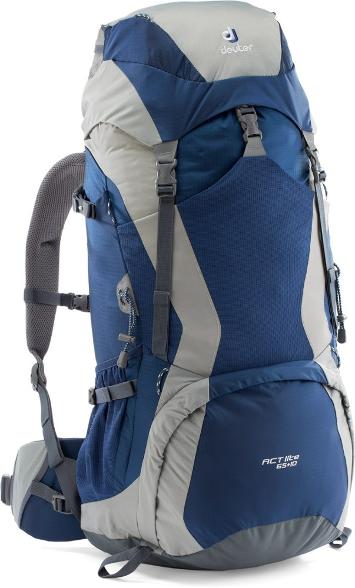
Given I’ll be away in autumn, I’ve decided to bring slightly more gear than I would otherwise have considered. This means my 35L Osprey backpack will not be enough. After trying a few options, I will be going with my trusted Deuter ACT Lite 60+10. At just under 2kg, its 35-65 blend of Super-Polytex polyester and Ripstop 210 nylon gives the ACT Lite packs high-performance durability without extra weight. I’ve also had it for about 10 years so it won’t blow a whole in my budget.
2 – Shelter
I could have stayed in hotels during the entire hike seeing as Belgium and Luxembourg are quite dense in terms of suitable accomodation but that would have exploded my budget. Beyond that, camping is much more of an adventure! So…. a tent then!
It took me a long time to settle down on which one to go for for this trip. Tents come in all sorts of shapes and sizes, weight and, of course, budget.

I ultimately went with a well-reviewed and well-loved tent from MSR, the Hubba Hubba NX 2P. This tent is solidly built and very light, coming up at just under 2 kilos (including a protective ground sheet). It has a two-layer system which should keep condensation down and MSR is well known as building sturdy, reliable material. I’ll be putting that to the test.
FYI, I hesitated for a long time on going with the 1 person variant (1.12 kg excluding the ground sheet) but the added space will probably be welcome during the trip.
3 – Sleeping gear
A key element to take into consideration. Good quality sleep will be essential to keeping me up and going.
Sleeping pads

Once again, there is a plethora of options to chose from. The key factors I kept in mind were weight and R-values. The latter is a related to the pad’s ability to insulate you from the ground, keeping you warm, basically.
Given these criterias, I chose to go with another tried and tested air mattress, the NeoAir® XLite™ Sleeping Pad from Therm-a-Rest. At just 340 grams, it has a 4.2 R-value, meaning that this mat should be able to keep me nice and warm during my trip.
Sleeping bag

At the end of the day, weight and volume concerns made it obvious: I needed a down-filled sleeping bag; warm enough to keep me comfortable along the way.
I ended going for RAB’s Ascent 500. At just over 1kg, the sleeping bag is filled with 500g of 650 fill power ethically sourced European Duck Down. Enough to keep me nice and comfy down to -6°C.
I’ll also be bringing a bag liner so this should help me stay warm, even if the temperatures were to drop any lower.
Sleeping pillow

Light, compact and comfy, I will going with the Trekology Aluft 2.0 inflatable pillow. At just 100 grams, this is a non-expensive solution to bolstering a good night’s sleep.
Cooking
Ah, food!

I’ll be going simple on this one. One 700ml stainless steel GSI Outdoors mug, an MSR Pocket Rocket 2.0 stove for the heat source and a light weight, collapseable plate, mug and coffee filter from Sea to Summit. Finally, one titanium long-handled spork, bought right off of Amazon should do the trick.
To ensure I have a safe and steady supply of water, I will also be bring my trusty camel pack, coupled with the Sawyer Squeeze water filtering system. This will enable be to refill at any water-source without fear.
Shoes

The eternal debate. Hiking boots or low trail-running shoes. Goretex, or not…
I’m not entirely out on the debate but decided to put my trust in a sturdy pair of Hanwag Banks GTX for the hike, and very comfy barefoot shoes from Merrell for when I’m relaxing at camp.
Clothing
How little clothing is enough clothing? That is the question.
The objective is to travel as light as possible so the clothing will be limited to essentials.
During the hike
Hiking pants/ shorts, 2 merino wool shirts, a few changes of underwear and hiking socks, a fleece sweater, and rain-wear, including the Arc’Teryx Beta SL jacket I reviewed a little while back. Of course, given it’s autumn, I’ll be bringing the essential Buff, gloves, and a beanie to keep me warm.
October also happens to be hunting season so I’ve added a neon yellow cap to the mix, hoping this will increase my visibility and avoid me ending up as someone’s Sunday roast.
Camping

The Cerium SV light-weight puffy from Arc’Teryx, a night fleece, thermal underwear and comfy shoes should do the trick.
There are many other bits and bobs that will be coming along, notably a sit pad and my hiking sticks but this covers the basics at least.
Overall Weight
To calculate my base weight, that is excluding water and food, I reach a total of 14 kg, including all the electronics I intend to bring along to document my trip.
If along the way I discover I don’t use certain items, I’ll simply post them back home.
Overall Budget
There’s no sugar-coating things, this hasn’t been cheap, though I did try to cut costs down where I could. Sure, there were cheaper options to the products I chose but the rationale was based on three points:
- going for a more expensive light weight options make sense as I would basically be carrying these non-stop on my back
- these products will hopefully last me a life-time
- what I would spent on hotels on a similar journey would far out-weight the cost of the products on this list.
The most expensive items are all related to the sleeping gear, racking up a grand total of 862 euros and 67 cents. A very painful pill to swallow, but an essential one.
The cooking system, including all utensils adds up to 154 euros and the Sawyer water filtration system adds a 65 euro note to the bill. I definitely feel like I could have gone for a cheaper alternative in terms of cooking stove but after checking all the reviews, I really wanted to give the MSR Pocket Rocket 2 stove a go.
This brings my total investment to just above 1000 euros for a 30 day hike, excluding transport and camping expenses.
There are a few more bits and bobs to add to this list. I will make a total overview of what this adventure actually will have cost me in the future.
If you have any questions or feedback, be sure to reach out and comment below or on one of my social media channels.


 Back Trail Adventures
Hello. Thank you for sharing your hiking’s pictures and videos ! I was looking for more details about the trousers you are hiking with (i saw them on your youtube chanel). Are they well a strech ones ? They are from fjallraven, but do you know the model ? Thank you !
LikeLike
Thank you Olivier. I am glad you enjoyed the content.
The trousers I was wearing are the Fjällräven Kaipak Trousers Long. A great all-rounder if you ask me. it is built with a very resistant material with includes stretch material on the inseam and behind the knees which makes for great breathability and mobility. You can also wax the trousers to make them watertight though I opted not to do so for my trip. Given the nature of the material, they were very quick to dry when wet and they also include straps at the bottom of each leg to secure the trousers to your hiking boot, useful especially when going off the beaten track.
I definitely recommend them for hikes in cooler weather!
Take care
David
LikeLike